

Introduction
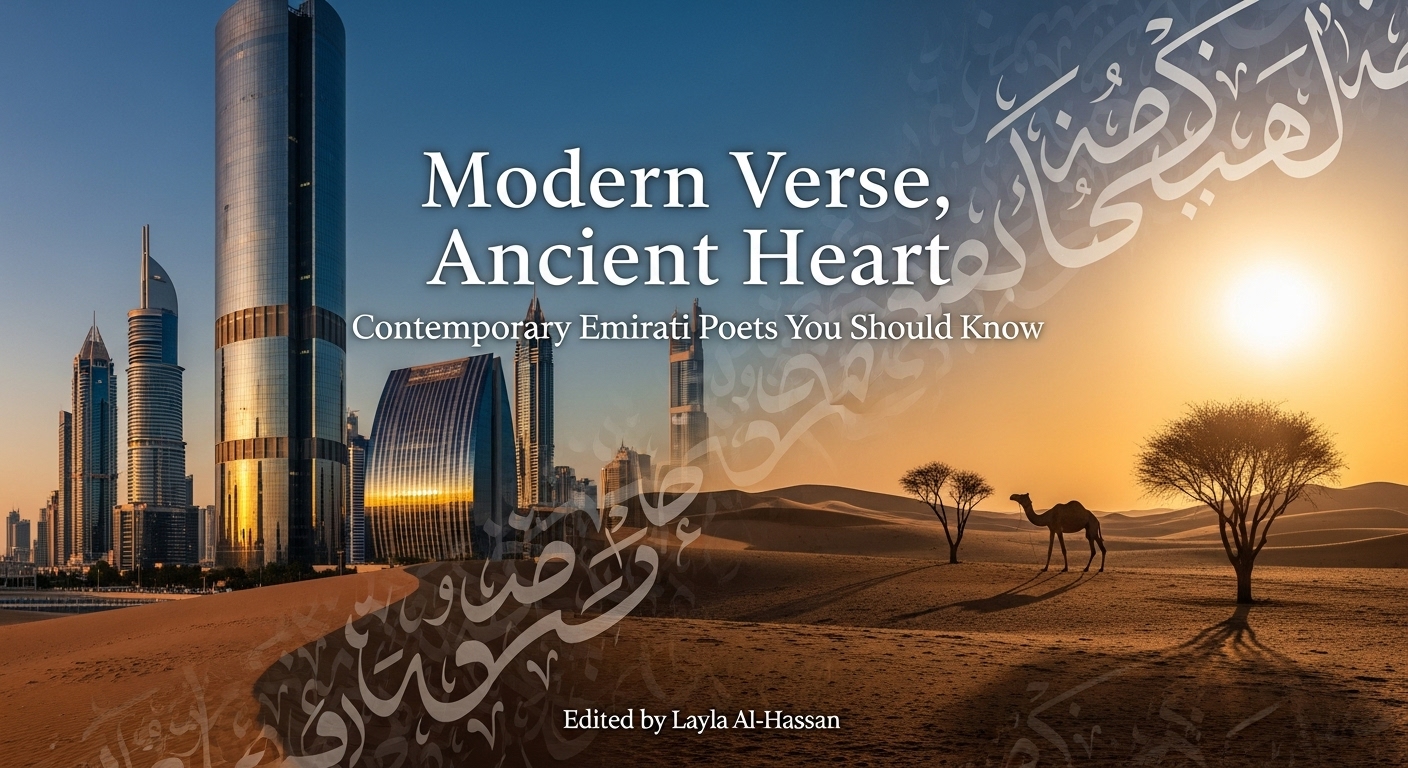
While the legacy of Nabati giants like Ibn Daher casts a long shadow, the poetic landscape of the United Arab Emirates is far from static. A new generation of Emirati poets is boldly stepping forward, crafting a contemporary verse that beats with an ancient heart. These writers honor the traditional forms and themes of their heritage while fearlessly exploring the complexities of modern life, creating a dynamic and exciting literary movement that speaks directly to the present moment.
History
The rise of contemporary Emirati poetry is linked to the nation’s educational expansion and increased global connectivity. With greater access to university education—both at home and abroad—Emirati poets have been exposed to a wide array of global literary influences, from Western modernism to post-colonial literature. Since the late 20th century, these poets have begun to experiment, moving beyond the strict confines of classical and Nabati metrics to explore free verse and prose poetry. They write in both Formal Arabic and the Emirati dialect, choosing their medium based on the audience and emotional impact they wish to achieve.
Key Features
The work of contemporary Emirati poets is characterized by its thematic diversity and formal experimentation. Key features include:
- Hybrid Identity: Exploring the tension and harmony between traditional Bedouin values and a globalized, hyper-modern urban existence.
- Social Commentary: Addressing contemporary issues such as gender roles, environmental concerns, social media, and the pace of change.
- Personal Lyricism: A shift from the collective “we” of traditional poetry to a more intimate, personal “I,” focusing on individual emotions and experiences.
- Formal Innovation: While many still master Nabati, others are adopting free verse, short-form poetry, and blending visual arts with text.
- Linguistic Blend: Some poets mix classical Arabic, dialect, and even borrowed English words, reflecting the multilingual reality of the UAE.
Cultural Significance
This new wave of poetry is culturally significant because it provides a critical, introspective voice within a rapidly evolving society. It helps the nation process the immense changes of the last 50 years, giving artistic expression to the joys, anxieties, and questions of modern Emirati life. These poets are the chroniclers of the present, documenting the inner landscape of a generation that is both deeply proud of its heritage and actively shaping its future. They ensure that poetry remains a relevant tool for understanding the human experience in the context of the 21st-century UAE.
Modern Relevance
The relevance of these poets is undeniable. They publish collections that become bestsellers, perform at sold-out spoken word events, and maintain a strong presence on social media platforms like Instagram and X (formerly Twitter), where they share their work with a vast, engaged audience. Their poetry is discussed in literary supplements, taught in universities, and often touches upon themes that resonate powerfully with the youth, such as self-discovery, ambition, and navigating a multicultural society. They are active, living artists who contribute to the nation’s cultural dialogue.
Conclusion
The contemporary poets of the UAE are not abandoning their ancient heart; they are giving it a new voice for a new era. They demonstrate that tradition is not a cage to be escaped but a foundation to be built upon. By weaving the timeless themes of love, loss, and identity with the unique textures of modern Emirati life, they are ensuring that poetry remains a vital, pulsating part of the nation’s cultural ecosystem. To