

Introduction
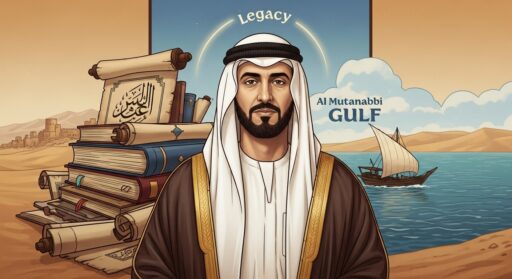
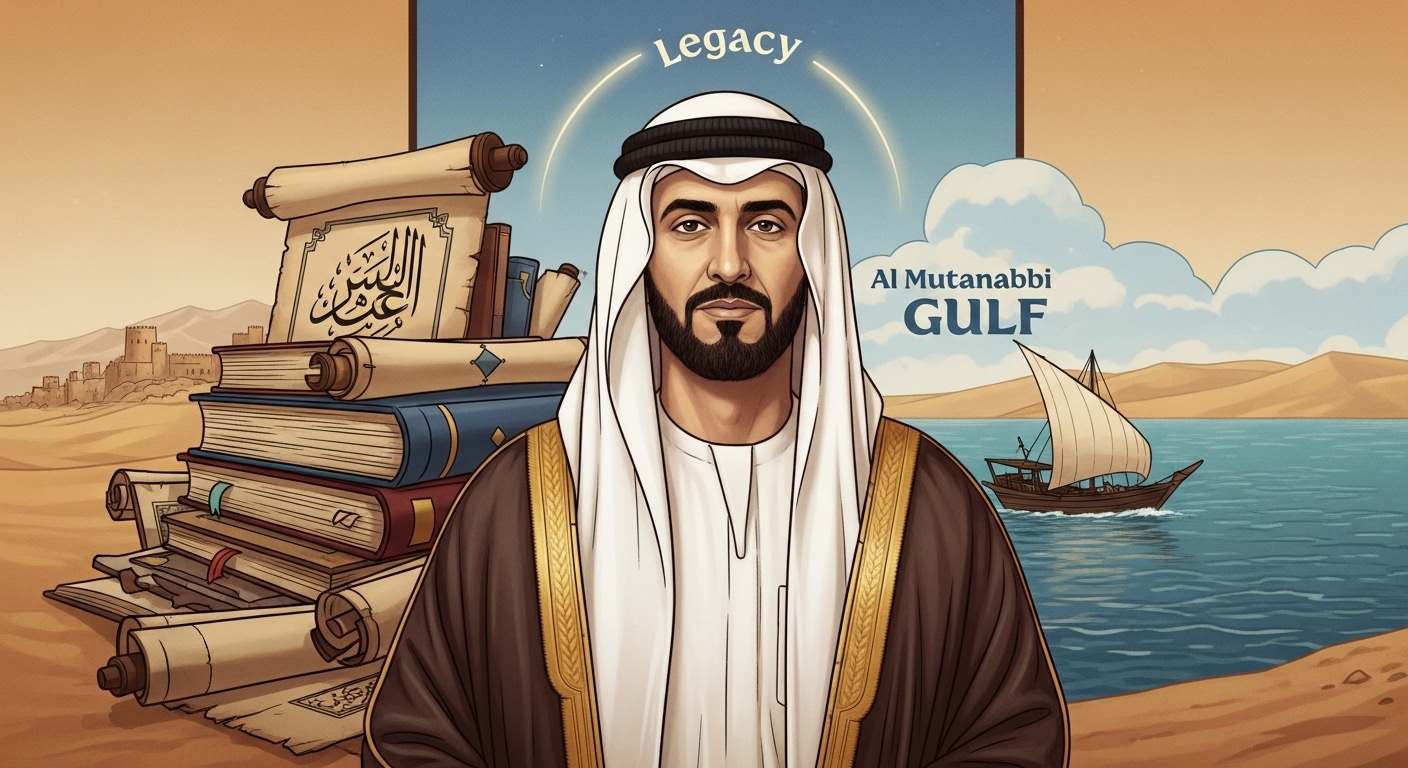
In the annals of Emirati cultural history, few figures shine as brightly as Obaid bin Salem bin Daher Al Juhaimi, more famously known as Ibn Daher. Revered as the “Imam of Nabati Poets” and often compared to the legendary classical poet Al-Mutanabbi, Ibn Daher’s work represents the pinnacle of the Nabati tradition in the UAE. His life and verse encapsulate the spirit of his time, offering a masterful blend of wisdom, eloquence, and deep insight into the human condition, leaving a legacy that continues to inspire poets and the public alike.
History
Ibn Daher was born in the late 19th century (c. 1870) and lived until the mid-20th century (c. 1945), a period of profound change in the Trucial States. He witnessed the decline of the pearling industry, the hardships of pre-oil life, and the early influences of the modern world. Hailing from the Al Ain region, he was blind from a young age, a condition that is widely believed to have sharpened his inner vision and memory, fueling his poetic genius. He traveled extensively throughout the peninsula, absorbing stories and dialects, which enriched his poetry and broadened his reputation from a local poet to a regional literary figure.
Key Features
Ibn Daher’s poetry is distinguished by its profound philosophical depth and mastery of the Nabati form. His verses often explored complex themes such as justice, destiny, patience, the transience of life, and the importance of good character. While he employed the common imagery of desert life—camels, stars, and oases—he used them as metaphors for larger philosophical concepts. His language was both accessible and exceptionally refined, capable of conveying intricate ideas in a way that resonated with both the common Bedouin and the educated elite. His ability to weave moral and ethical lessons into beautiful verse is a hallmark of his style.
Cultural Significance
Ibn Daher transcended the role of a mere poet; he was a moral compass and a respected sage for his society. People would seek his counsel, and his judgments on social and personal matters, often delivered in poetic form, carried great weight. His poetry provided solace and guidance during a difficult era, offering a framework for understanding hardship and navigating life with wisdom and integrity. He became a unifying cultural figure, whose works were memorized and recited across the region, creating a shared literary heritage for the tribes of the UAE and beyond.
Modern Relevance
The legacy of Ibn Daher is powerfully alive in the modern UAE. He is a standard against which contemporary Nabati poets are measured. His poems are still widely quoted in everyday conversation, media, and political speeches, their timeless wisdom applicable to modern life. Academic studies and cultural institutions continue to analyze and celebrate his work, ensuring his techniques and themes are passed on to new generations. For aspiring poets, he remains the ultimate model, demonstrating that Nabati poetry is capable of achieving the highest levels of artistic and intellectual expression.
Conclusion
Ibn Daher stands as a colossal figure in the cultural landscape of the UAE, a poet who gave eloquent voice to the soul of his people during a pivotal century. His work elevates Nabati poetry from folk art to high literature, filled with a wisdom that transcends time. In an era of rapid modernization, his enduring popularity is a testament to the deep and abiding human need for the guidance and beauty that only true art can provide. The “Imam of Nabati Poets” remains, as ever, a guiding star in the firmament of Emirati culture.